


How to Choose a Custom Jewelry Maker: 7 Questions to Ask
Custom Jewelry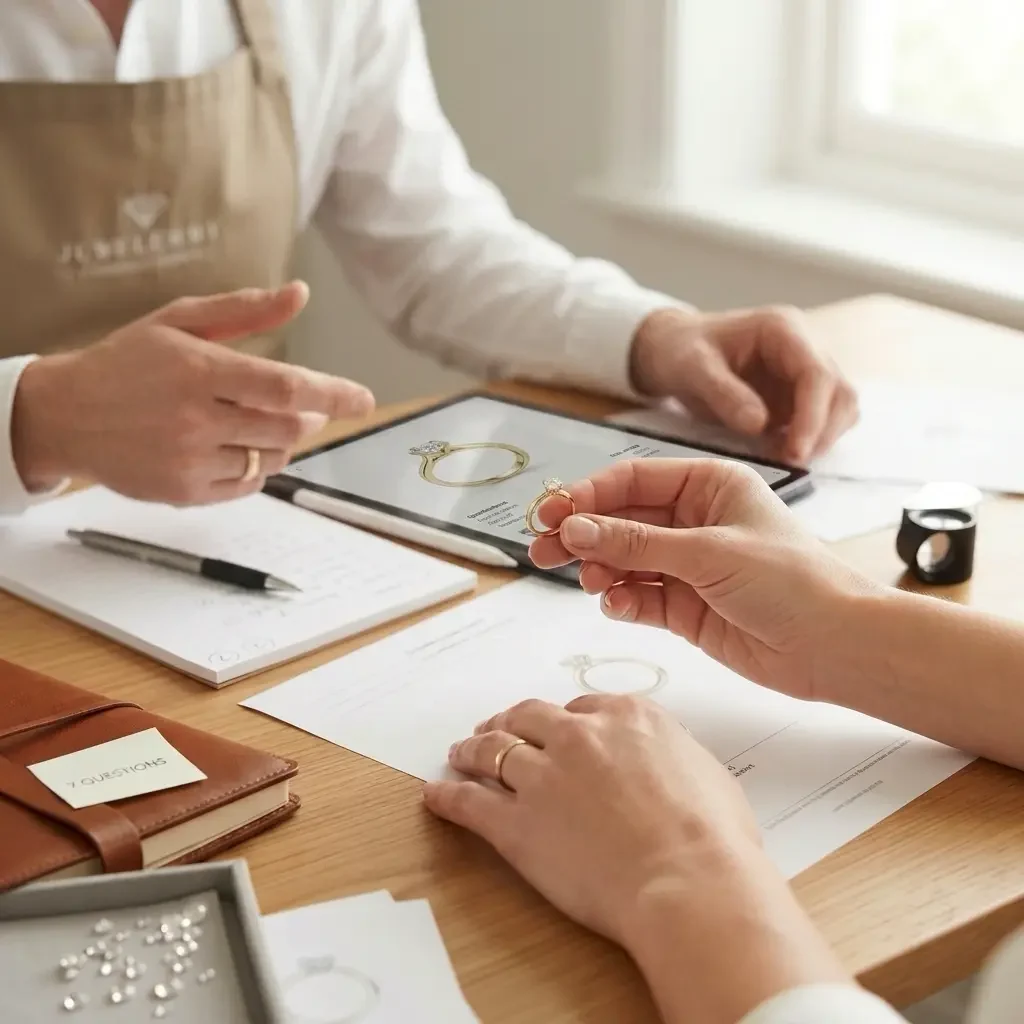
How to Choose a Custom Jewelry Maker: 7 Questions to Ask
Most people pick a custom jewelry maker the way they pick a restaurant in a city they haven't been to. Look at the pictures, skim the reviews, hope. Fine for dinner. But poor if you're handing someone your grandmother's diamond and a four-figure deposit.
And "custom" isn't a regulated word. A company can advertise custom engagement rings, take your order, and email the spec to a factory overseas. Another designs and builds it in house. On a website those two look identical. Asking questions is the only way to tell them apart.
Key Takeaways
Before committing to a custom jewelry maker, confirm who physically makes the piece, whether you get to approve a CAD render before casting, and what the quote actually covers.
- Plenty of companies advertising custom jewelry outsource production overseas. The Custom Jeweler designs and manufactures in the USA.
- Approve the CAD before anything gets cast. Changes are cheap in software and expensive in metal.
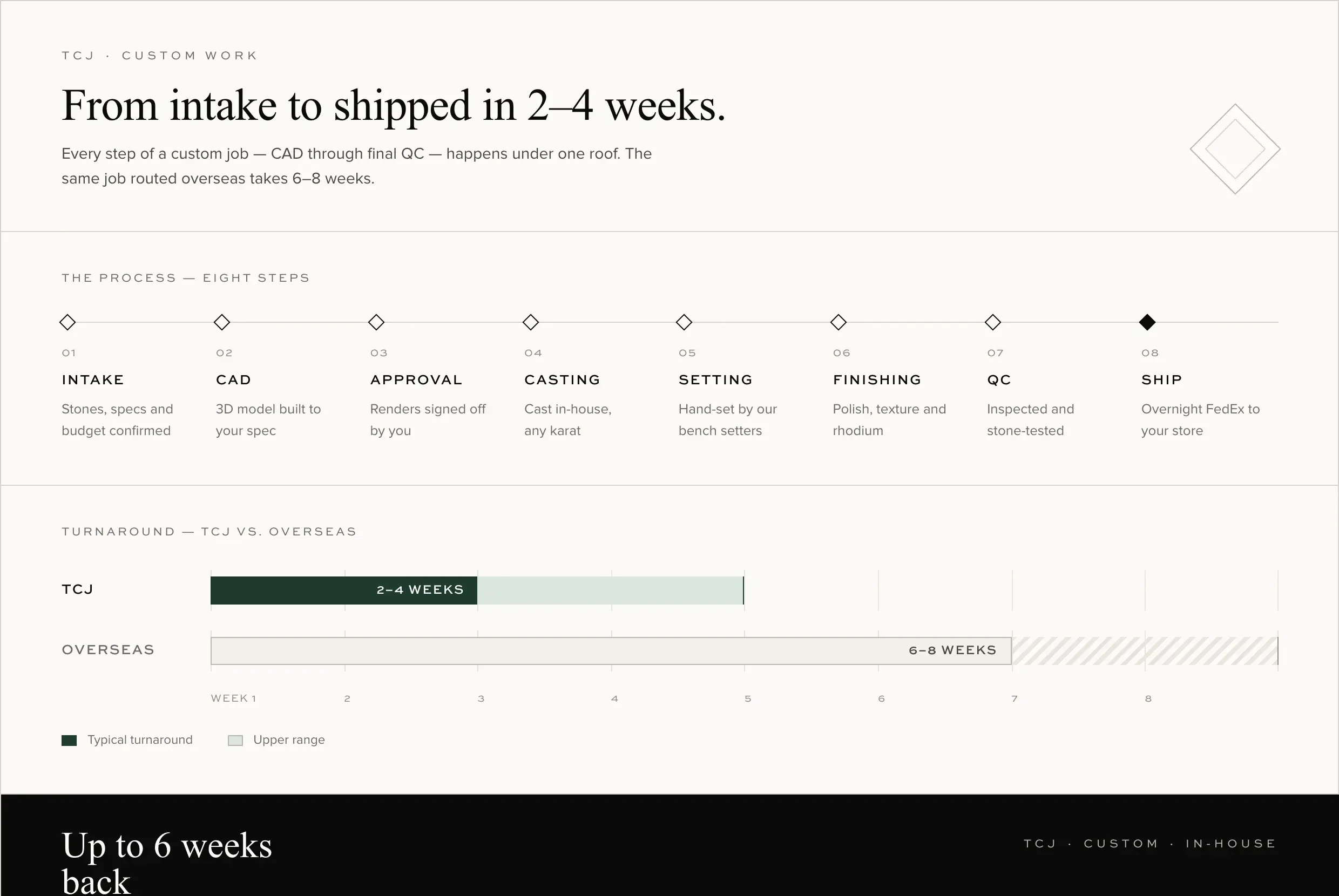
- Most of our commissioned pieces deliver in two to four weeks. The big online builders commonly quote six to eight.
- If a maker holds your diamond, get a written intake agreement first — weight, measurements, grading details.
- A quote should say whether setting, sizing, engraving, appraisal, and insured shipping are in or out.
Written by the design team at The Custom Jeweler, 2 West 45th Street, New York. Updated August 2026.
Seven questions to ask a custom jewelry maker
1. Who physically makes this piece, and where?
Start here.
Plenty of retailers offering custom design are really assembling stock components — cataloged head, cataloged shank, stone dropped in. That's assembly. It isn't custom work.
Ask where casting and setting actually happen. If the answer goes vague — "our production partners," "our workshop network" — that's usually an overseas factory nobody can hurry. We make ours in the USA, which is why most projects take two to four weeks, not two months.

2. Will I see a CAD before you cast anything?
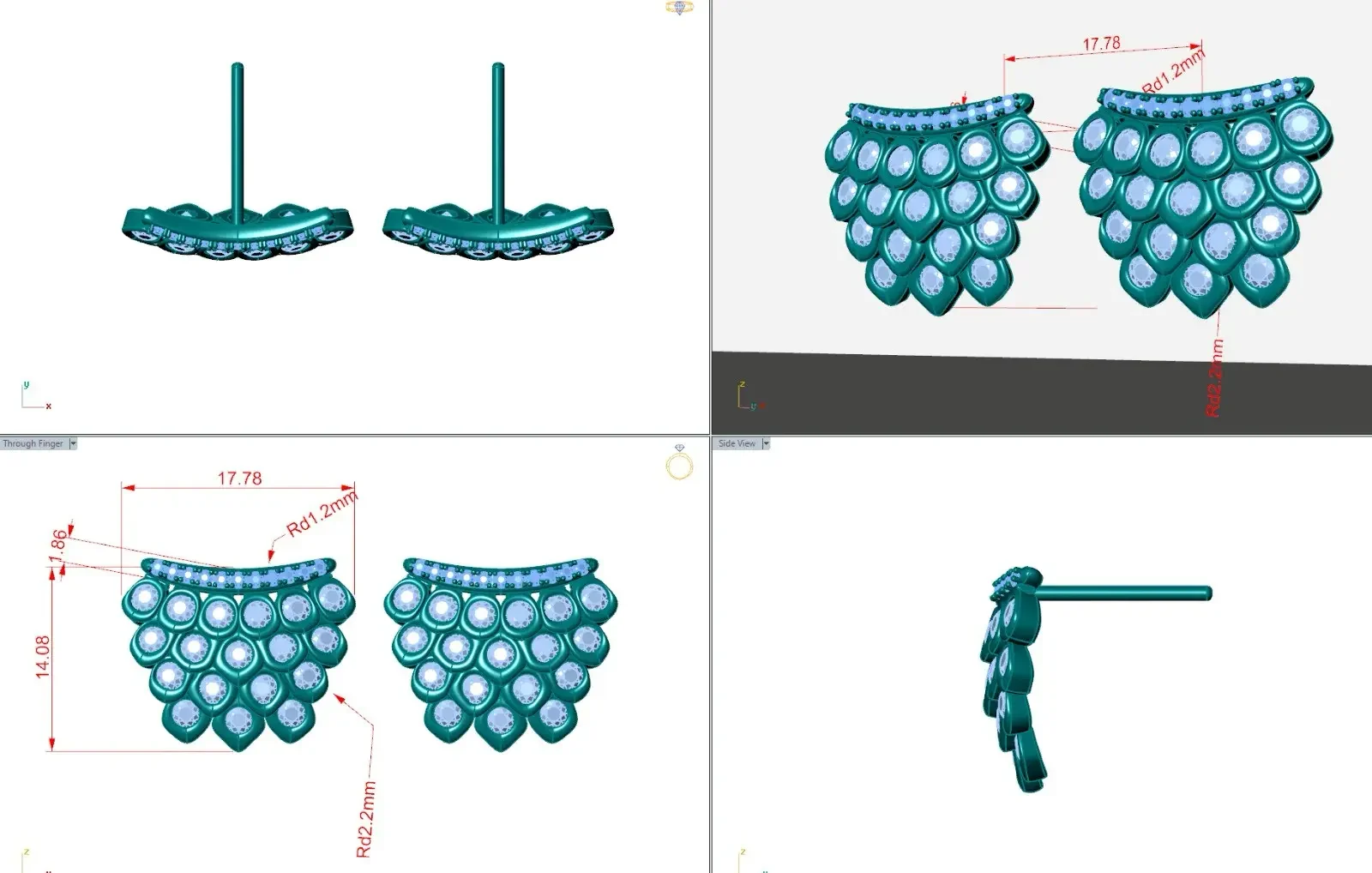
A CAD file is a 3D computer model of your piece — rotatable, accurate to fractions of a millimeter, built before any metal exists. See it, approve it, and understand it's your last easy chance to make changes.
That's the part people miss. Moving a prong in CAD takes twenty minutes. Moving it after casting means starting over. Find out how many revision rounds are included and what triggers a charge.
If you'd rather walk in with something visualized, our AI jewelry design tool is a decent start. It won't produce a manufacturable file — no generator does — but it saves two conversations.
3. What's your turnaround, deposit to delivery?
Not "how long does production take." Deposit to delivery. The gap between those two is where schedules quietly slip.
A real timeline has stages: consultation, CAD, approval, casting, setting, finishing, quality check, shipping. Get a date for each, and find out whether a revision resets the clock. Six to eight weeks is standard for the big online builders, because work gets queued and shipped overseas.
4. Can I see finished pieces, not just renders?
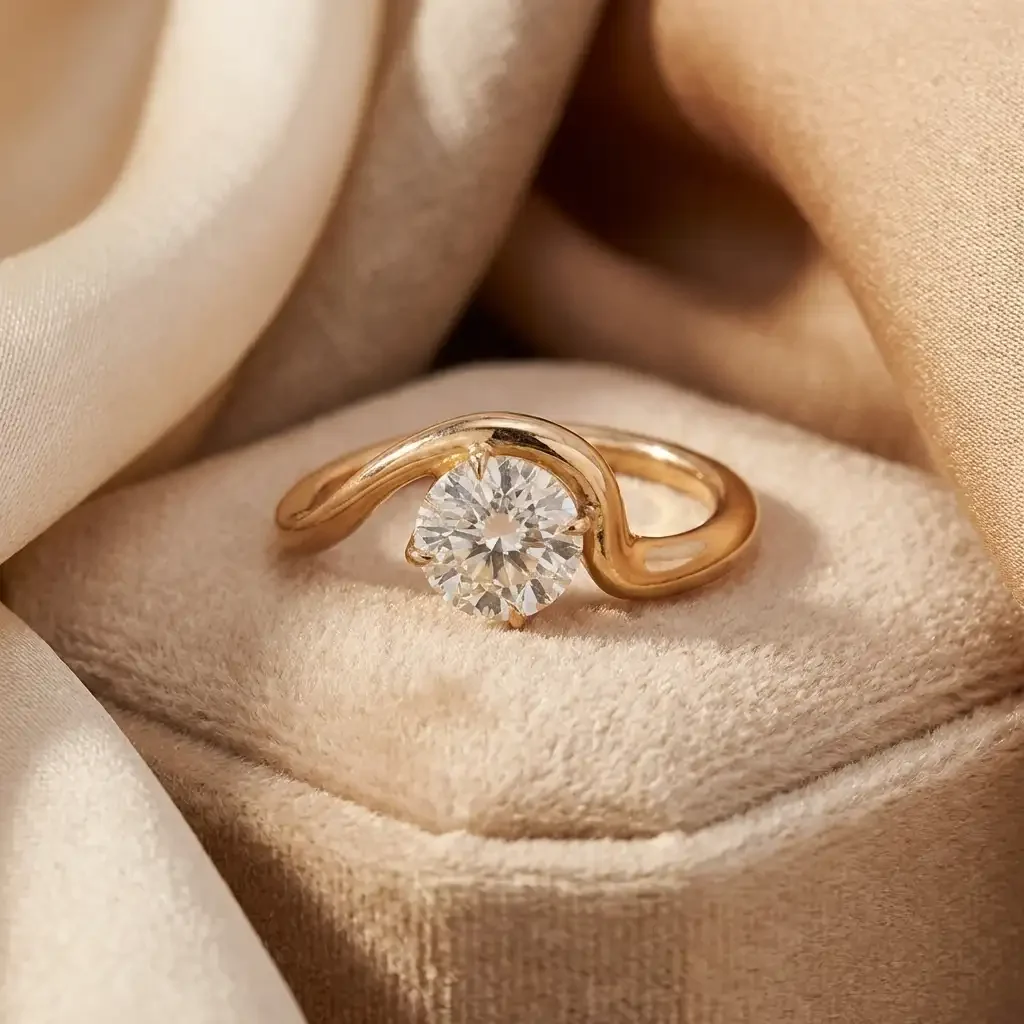
Renders are marketing. A CAD render is lit perfectly and has no tool marks, because it isn't real. Photos of finished work show whether the prongs are even and the finish is clean — and whether the gallery under the stone got detailed or left rough.
Ask for photos of completed commissions in your style. Better yet, hold one. Four minutes with a finished ring will settle more than an hour of scrolling.
5. What happens to my stone while you have it?
If you're supplying a diamond — bought separately, inherited, or pulled from a piece you're remounting — you're handing over an asset, and it deserves paperwork. Get a written intake agreement recording carat weight, measurements, color, clarity, and any report number before the stone leaves your hands. That document protects both sides: it's what you check the returned stone against, and it's what the jeweler points to if a question comes up later.
Then ask about the boring logistics. How is it insured while in their custody? How does it ship back? Can you verify it against its GIA or IGI report when it returns? Anyone uncomfortable with those questions has told you something useful.
6. What's in the quote, and what gets added later?
Some quotes include setting, sizing, and shipping. Some bill setting separately. Some leave appraisal off entirely.
Get it itemized: setting labor, sizing, engraving, rhodium plating on white gold, insured shipping, appraisal. We include a free IGI appraisal on pieces at $5,000 and up, but the point isn't our policy. You should have each answer, from any maker, before money moves. And since metal prices move too, ask how long the quote holds.
7. What happens if something's wrong when it arrives?
Just ask. It isn't rude.
Custom work is generally non-refundable, which is fair — nobody else wants a ring built to your spec. But non-refundable and no-recourse aren't the same thing. There should be a process for correcting a piece that doesn't match the approved CAD, a sizing policy, and a workmanship warranty. In writing, before the deposit.
Red flags worth walking away from
- A firm price quoted before anyone asked your budget or lab-grown versus natural. Those answers can swing a project threefold.
- No CAD approval step, or a CAD shown only after casting.
- Vagueness about where manufacturing happens or how long it takes.
- Full payment demanded upfront. Fifty percent to start is normal, balance on completion.
- A portfolio that's all renders and no photographs.
Frequently asked questions
How much does custom jewelry cost compared to retail?
Custom is usually comparable to retail for equivalent quality, sometimes less, because you're not paying for showroom inventory or brand markup. The real variables are the center stone, the metal, and how complex the design gets. We don't quote a firm number before a discovery call — budget and stone type move it too much. Once the CAD is underway, we give a price range that covers the options.
How long does a custom engagement ring take?
Most of our custom engagement rings deliver in two to four weeks from approved design, since production happens in the USA rather than overseas. Large online builders typically quote six to eight. Timelines stretch if you need several CAD revisions or we're sourcing a stone to your parameters.
Can I use my own diamond or an heirloom stone?
Yes, and it's one of the most common projects we take. We document the stone in writing on intake, check it for chips or wear that could affect setting, and design the mounting around its measurements. Older stones sometimes need minor work first.
What if I don't like the CAD render?
We revise it. That's the entire point of the CAD stage — changes happen in software, where they cost time instead of metal. Nothing gets cast until you approve the design. Most projects run one or two rounds. Some run more.
Start with the conversation
You don't have to commit to anything to ask these questions. Ask us, ask three other makers, compare. The differences show up fast.
When you're ready, start your custom project or book a consultation at the New York studio. If it's a ring, the custom engagement ring page covers stone selection and design.

Matthew Howe - Director of Operations — The Custom Jeweler
Matthew Howe has worked in diamonds since 2012, spending his first years alongside the buyers at a recycled and estate diamond wholesaler — learning how stones are graded, priced, and marked up well before they reach a retail case. He runs The Custom Jeweler day to day and still works client projects himself: the first call, the stone list, CAD approvals, and the last photos before a piece ships. Most of what he writes started as a question a client asked him on the phone.



.webp)