

The Trend For Custom Jewelry
Custom Jewelry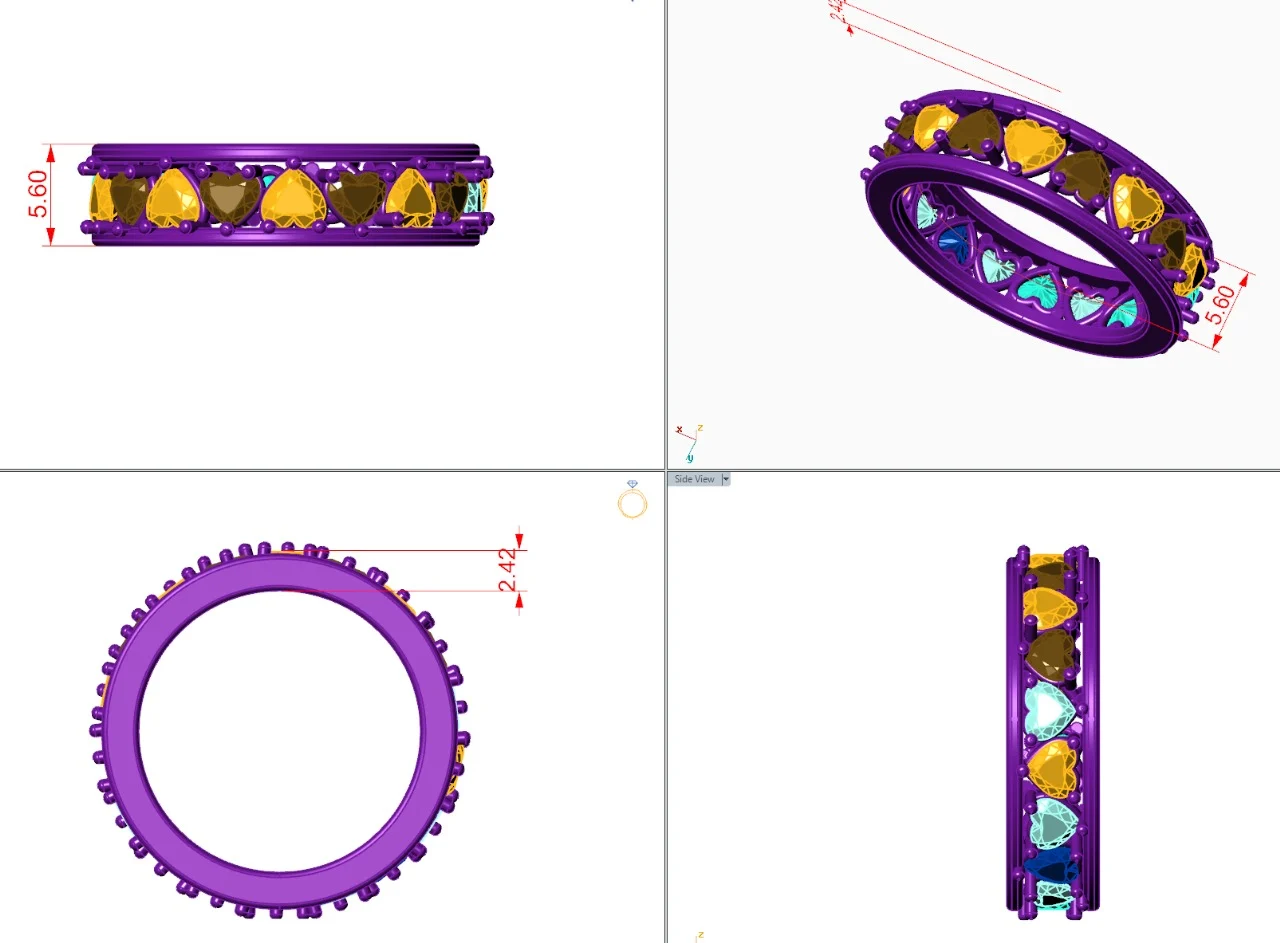
Why People Are Ditching the Display Case for Custom Jewelry
Walk into any jewelry store on a Saturday afternoon and you'll notice something. The cases are full, the lighting is perfect, and the sales associate is genuinely trying to help — but most people leave without buying anything. Not because the prices are wrong. Not because the quality isn't there. It's that nothing on the tray actually feels like theirs or talks to them.
That experience has been quietly reshaping how people spend money on jewelry for the better part of a decade now. And it's finally showing up clearly in the data.
The global jewelry customization market was sitting at roughly $1.61 billion in 2025 and analysts project it to nearly double to $3.98 billion by 2035, growing at around 9.5% annually. For context, the broader jewelry market overall is growing at closer to 5%. The gap between those two numbers is the story. And it's not a small shift in behavior. 68% of couples are now choosing customized rings when they get engaged, over ready-made options. That's a majority. That's not a niche.
The Generation Thing
The common thinking is that millennials and Gen Z are driving this because they're special or different or allergic to tradition. The reality is more practical than that. These are buyers who grew up with Spotify telling them what to listen to next, with Instagram feeds curated entirely around their taste, with sneaker customization tools and made-to-measure suits available online for a few hundred dollars. The expectation of personalization is just baked in. A ring that exists in a warehouse in several thousand identical copies doesn't fit that thought.
According to Jewelers of America's 2024 research, 63% of millennials and Gen Z consumers say they prefer brands that offer bespoke or customization options. Bain & Company's 2024 luxury report found these two generations now account for over 70% of global luxury sales growth. And 48% of Gen Z luxury buyers say they prioritize self-expression over brand recognition, which is a pretty significant thing when you think about how luxury marketing has traditionally worked. The logo used to be the selling point.
It isn't anymore. At least not for this group. Search volume for "custom name necklace" and "personalized ring" grew 37% year-over-year in 2024 per Google Trends. That kind of search growth doesn't happen without market demand.
The Tech Piece Nobody Talks About Enough
Here's something that gets undersold in these conversations: custom jewelry became a mainstream option largely because the process stopped being painful. Ten years ago, commissioning a custom piece meant multiple in-person consultations, a waiting period of several weeks, a leap of faith on what the final product would look like, and a price tag that reflected all of that friction. Most people just bought whatever was in the case instead.
Now, 37% of jewelers offer customization tools directly on their websites. The Custom Jeweler offers an AI generator to enable users to become involved in their design from the outset. 3D rendering and CAD design software let customers see exactly what they're going to get before any metal gets poured. Augmented reality try-on tools are live on several major platforms. The practical result of all this? Jewelers who've adopted real-time 3D previews have seen roughly a 34% decline in post-purchase returns. Which tells you that when buyers can actually see what they're ordering, they order better.
James Allen, Brilliant Earth, Angara — these brands built their whole model around this. Traditional houses noticed eventually. Tiffany and Pandora have both pushed hard into personalization, with engraved pieces and customizable charm collections becoming real revenue contributors rather than afterthoughts.
Lab-Grown Diamonds Opened the Door
You can't talk honestly about the custom jewelry boom without bringing up lab-grown stones, because they're connected. Demand for lab-grown diamond customization jumped 55% in 2024. Lab-grown diamonds are chemically identical to mined ones and cost anywhere from 30 to 60% less depending on where you're buying. For a buyer who always wanted a custom-designed piece but couldn't make the math work at mined-diamond prices, lab-grown changed the calculation entirely.
The ethics piece matters too, especially to younger buyers. 73% of Gen Z consumers say they'll pay more for sustainable products according to First Insight's 2023 research. Lab-grown stones answer that concern without asking buyers to compromise on quality. It's a pretty clean value proposition.
The Off-the-Shelf Market Isn't Disappearing
It is worth saying clearly: this isn't a eulogy for traditional jewelry retail.
The U.S. jewelry market hit $78.4 billion in 2024 and is on track to reach nearly $100 billion by 2030. The global costume and fashion jewelry category is projected to grow from around $39 billion to $66 billion by 2032. There's still an enormous market for ready-made pieces at every price point.
What's changing is more specific. The category of meaningful purchases — engagement rings, anniversary pieces, something someone will wear every day for twenty years — is shifting. And that's the category with the highest margins, the highest emotional stakes, and the most enduring customer relationships. Losing that customer to a competitor who offers a custom process is a different kind of loss than losing a fashion bracelet sale.
47% of online jewelry purchases now include some level of personalization. Think about how different that number would have looked in 2012.
Where This Is Headed
The honest answer is that custom jewelry is moving from exception to expectation. Not for every purchase, not for every buyer. But for the purchases that matter most, more people want to be part of the process rather than just selecting from what already exists. The display case will still be there. But a growing number of customers are going to walk past it and ask if they can start from scratch instead.
Most of the time now, the answer is yes.
Sources: Global Growth Insights, Market Growth Reports, Cognitive Market Research, Fortune Business Insights, Arizton Advisory & Intelligence, Jewelers of America (2024), Bain & Company (2024), First Insight (2023), Google Trends (2024), CaratX Consumer Survey.
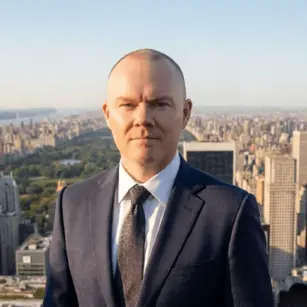
Matthew Howe - Director of Operations — The Custom Jeweler
Matthew Howe has worked in diamonds since 2012, spending his first years alongside the buyers at a recycled and estate diamond wholesaler — learning how stones are graded, priced, and marked up well before they reach a retail case. He runs The Custom Jeweler day to day and still works client projects himself: the first call, the stone list, CAD approvals, and the last photos before a piece ships. Most of what he writes started as a question a client asked him on the phone.